
Bisila Noha Wins the Inaugural Tacchini Prize: Spanish–Equatorial Guinean Ceramicist’s Cracking Vessels and Two-Legged Sculptures
Spanish–Equatorial Guinean ceramicist Bisila Noha has been announced as the inaugural winner of the Tacchini Prize. Established by Italian furniture brand Tacchini together with Fondazione Officine Saffi, a non-profit devoted to contemporary ceramics, the award recognises practice at the intersection of contemporary art research and design culture, treating material as a field for research and expression.
A new body of work at Casa Tacchini
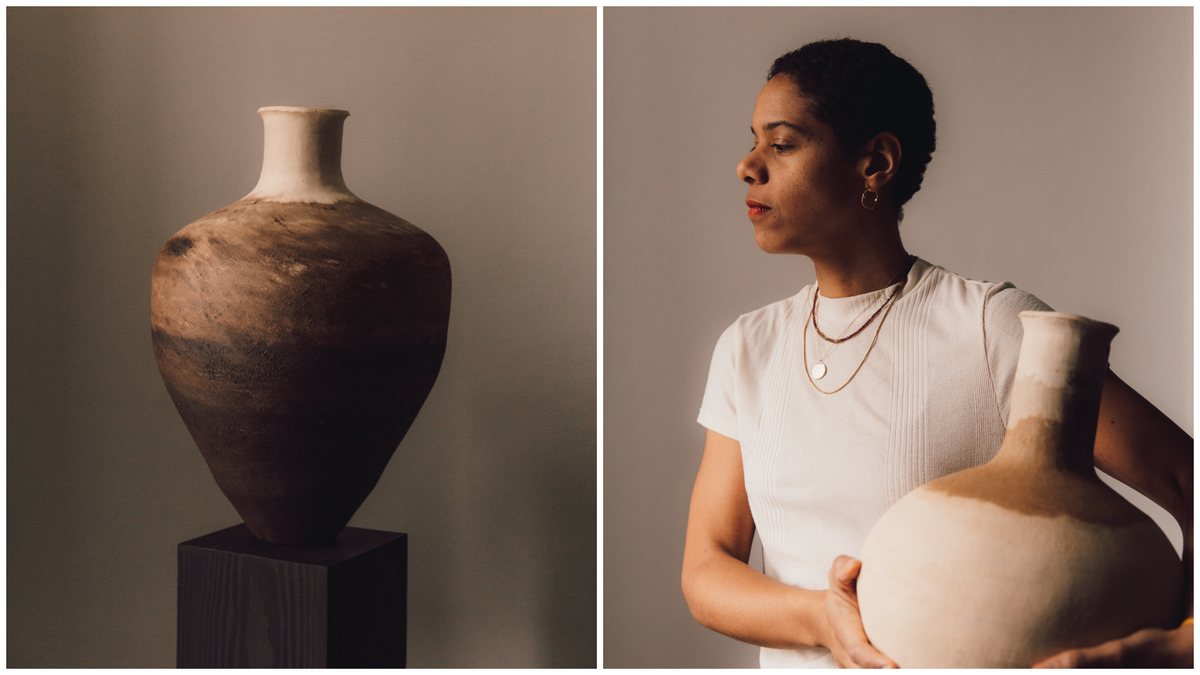
Running alongside the award is Noha’s solo show at Casa Tacchini in Milan — the brand’s showroom converted from an apartment. On view until 13 November 2026, it presents Noha’s sculptural and expressive ceramic works among selected pieces of Tacchini furniture.
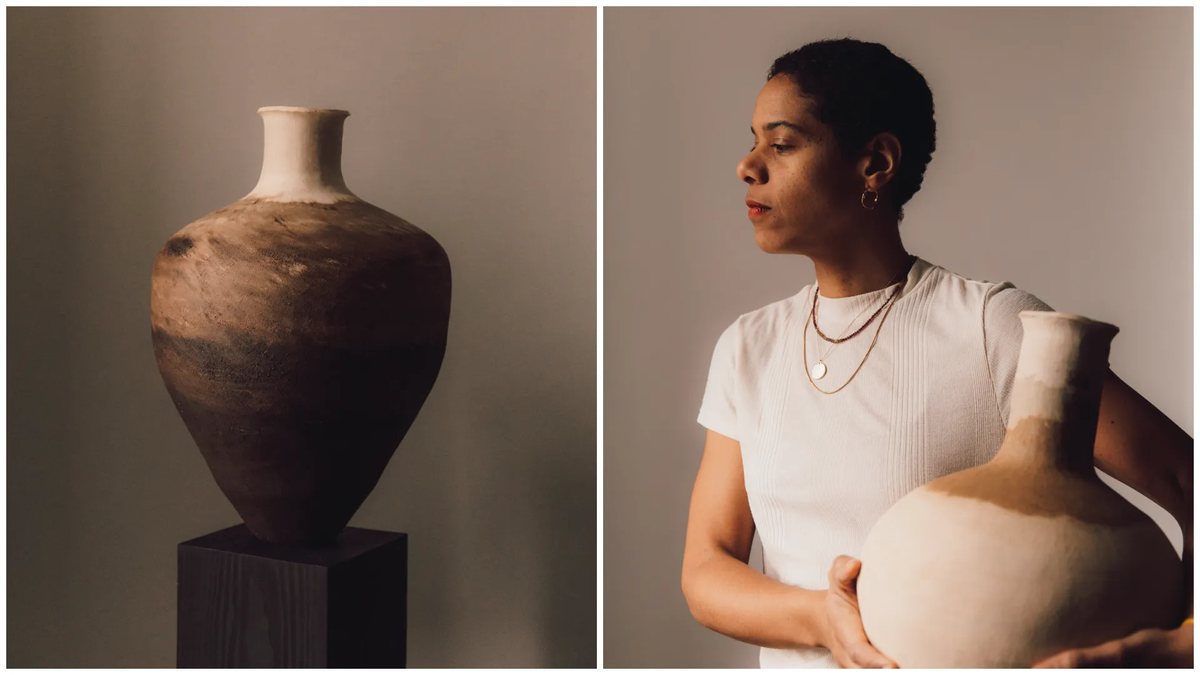
The way the works are installed is itself telling: vessels that appear to be cracking and falling apart are suspended from the ceiling on ropes; a two-legged sculpture stands in a lit corner; a large vessel with a gradient glaze sits by the window. These treatments break the convention of ceramic objects "placed centre-stage and looked up to," letting them occupy space with an almost bodily presence.
From advertising to clay
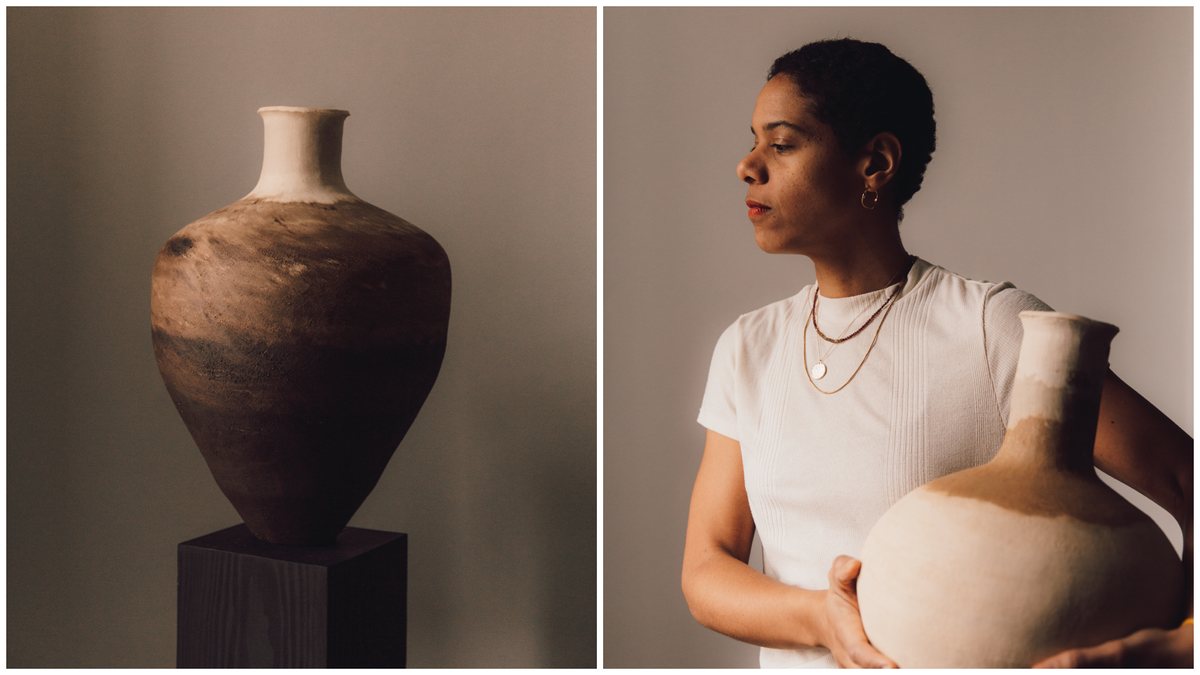
Noha’s star began to rise in 2016 when she left her career in advertising to explore ceramics. She told Wallpaper that she simply fell in love with it. Since then she has completed numerous international residencies and solo shows, and her work has entered collections including the V&A.
Her practice is closely bound to her experience of identity. As a Spanish–Equatorial Guinean maker, she weaves cultural, communal and feminist themes into her work, lifting her ceramics beyond "craft revival" into contemporary art practice concerned with identity and belonging.
Why a furniture brand founded a ceramics prize
Tacchini’s collaboration with Fondazione Officine Saffi represents a spreading model: furniture brands no longer only sponsor design directly tied to their product lines, but intervene at a more fundamental level of material research through prizes and residencies. Ceramics — a craft demanding long accumulation and deeply reliant on manual experience — is precisely the ideal object for such intervention.
For the design industry, the significance of such awards lies in building a non-commercial, research-oriented relationship between brand and culture: the brand supplies space and funds, the artist supplies a methodology of uncertainty. SEEEEART will continue to follow contemporary practice in ceramics and craft.
Cracking as a language
Technically, the "cracking" and "falling apart" that recur in Noha’s work are not accidental effects but her active control of clay’s shrinkage and firing. Such handling turns the material’s instability into a means of expression, standing in sharp contrast to the traditional ceramic pursuit of a flawless glaze.
This also signals a wider shift: contemporary ceramics is moving from "vessel" to "sculpture," from the pursuit of perfection to the use of imperfection. SEEEEART will continue to follow material experiments in the field of ceramics.
Disclaimer: Except for original works, the articles, images, videos and music used on this platform belong to their respective rights holders. Due to unavoidable circumstances, some content may be used without proper attribution. If you are a rights holder and your work has been used without permission or with incorrect credit, please contact us and we will correct it promptly. We are committed to maintaining a healthy creative environment.
